Christmas Unicorn Sleigh
A Designer’s First Glance: Whimsy with Holiday Weight
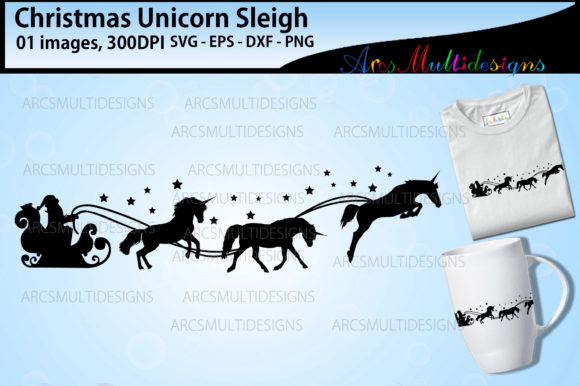
Opening Christmas Unicorn Sleigh for the first time, I felt that familiar little lift—the kind that happens when a design balances charm and clarity. It’s not just “cute.” It’s a cohesive illustration: a prancing unicorn in a miniature sleigh, wreath-wrapped reins, tiny snowflakes suspended mid-air, and subtle holly accents framing the scene. The composition reads cleanly at a glance—no visual clutter, no competing focal points. That matters immensely when you’re stitching onto a curved sweatshirt chest or a baby onesie pocket. As an embroidery designer who’s seen too many “adorable” illustrations fall apart under needle and thread, I appreciated how thoughtfully the shapes are simplified: rounded limbs, generous negative space around antlers, and intentional gaps between sleigh runners and ground. This isn’t just a graphic—it’s a machine embroidery design waiting to translate well.
Where It Shines: Real Projects, Real Customers
Last week, I used Christmas Unicorn Sleigh to embroider a set of organic cotton tote bags for a local boutique’s holiday pop-up. The result? Consistent stitch definition, strong customer response (especially from parents and gift shoppers), and zero reworks. Why? Because the design’s moderate detail level—neither overly sparse nor densely packed—holds up beautifully on medium-weight woven fabrics. It works equally well as a centered chest motif on a unisex sweatshirt, a playful corner accent on a linen tea towel, or a stitched patch sewn onto a denim apron. For Etsy sellers and small shop owners, this versatility is gold: one digital embroidery file can feed multiple product lines without needing redesigns. I’ve also tested it on 100% cotton baby bodysuits—using lightweight tear-away stabilizer—and the satin-stitched mane retained softness while staying legible after three washes. That’s rare in holiday-themed graphics, where fine details often blur or pucker.
What to Watch For: Texture, Scale, and Fabric Behavior
Like any illustration-turned-embroidery-file, Christmas Unicorn Sleigh demands thoughtful placement. On highly textured fabrics—think terry cloth towels or bouclé knit blankets—the fill stitches can sink slightly, muting contrast. I recommend testing on scrap first and possibly increasing top tension or switching to a slightly heavier thread weight. On stretchy knits like jersey tees, use cutaway stabilizer and avoid placing the design across major seams or shoulder curves—those areas distort during wear and can pull delicate running-stitch outlines out of alignment. Also, be cautious on dark fabric: the original illustration uses light-toned highlights (like the unicorn’s horn glow or sleigh trim), which may require white underlay or careful thread color selection to stay visible. If you’re planning caps or curved surfaces, confirm your hoop size accommodates the full width—some versions of this design extend just wide enough to graze hoop edges, risking skipped stitches if not centered precisely.
Why It Builds Trust—Not Just Cuteness
Customers don’t buy “unicorns.” They buy confidence: confidence that a personalized gift feels special, that a boutique sweatshirt looks professionally made, that a handmade nursery pillow holds up to real life. Christmas Unicorn Sleigh supports that trust because its proportions feel intentional—not cramped, not sprawling—and its line weights hold consistency across stitch types. When stitched in high-contrast thread (navy on cream, forest green on ivory), it reads clearly from six feet away—critical for shelf appeal at craft fairs or Etsy thumbnails. As a digital embroidery file, it also scales cleanly for printable mockups, helping small business owners visualize final products before production. That professionalism reflects back on *you*: your brand feels curated, your handmade product feels considered, and your customer feels like they’ve chosen something joyful *and* well-made—not just seasonal filler.
Practical Notes Every Embroiderer Should Run Through
- Always test first: Stitch Christmas Unicorn Sleigh on scrap fabric matching your final substrate—same weight, same weave, same stretch.
- Check thread color contrast: Especially on dark or heathered fabrics—what reads as “sparkle” on screen may vanish without white underlay or metallic thread accents.
- Review stitch density: If your machine struggles with dense fill areas (like the sleigh base or wreath), consider reducing density by 5–10%—it rarely sacrifices legibility but improves stability.
- Confirm hoop size compatibility: Measure your intended placement area and compare it to the design’s dimensions—don’t assume “medium” means the same thing across all digitizers.
- Inspect small details: Antler tips, snowflake points, and rein bow loops are common failure zones. Zoom in on your embroidery software to ensure they’re digitized with clean satin or running stitch—not fragile isolated dots.
- Test black-and-white mockups: If you plan to offer monochrome versions (for minimalist branding or budget-conscious buyers), verify readability without color cues.
- Use proper stabilizer: Lightweight for stable wovens, cutaway for knits, tear-away for temporary backing on towels or napkins.
- Verify licensing scope: Since this is a digital embroidery file sold as an Illustration/Graphics asset, confirm whether commercial use—like selling finished embroidered patches or wholesale apparel—is permitted before listing on Etsy or at craft markets.
Final Thought: A Design That Works—Not Just One That Looks Nice
Christmas Unicorn Sleigh isn’t flashy. It doesn’t shout. But it *performs*. In my studio, it’s become a quiet workhorse: reliable on baby items, charming on kitchen linens, distinctive on custom apparel, and commercially flexible across craft business models. It fits the sweet spot between illustrative personality and embroidery practicality—a rare balance in holiday-themed design assets. Whether you’re stitching for joy, gifting with meaning, or building a small shop’s seasonal lineup, this is one digital embroidery file that earns its place in your active library. Just remember: great embroidery starts with smart choices—not just pretty pictures.