Line Drawing Flowers Vector Clipart SVG
A Delicate, Hand-Drawn Vibe—But Does It Stitch Clean?
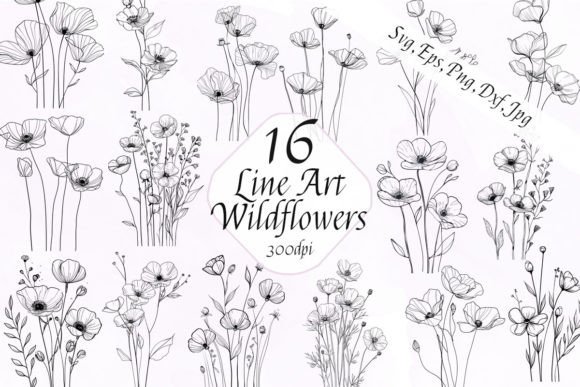
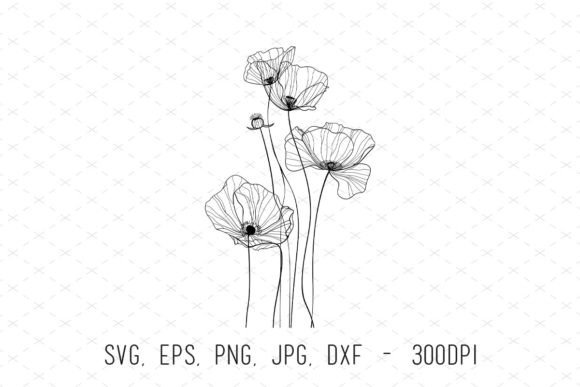
First impression? This Line Drawing Flowers Vector Clipart SVG feels like a quiet sketchbook page—light, airy, and full of gentle botanical rhythm. The wildflowers aren’t fussy or overly symmetrical; they lean slightly, curl at the tips, and breathe with organic imperfection. That’s its strength—and also where embroidery decisions get real. I opened it in my digitizing software last week while prepping a custom embroidered linen tote for a local boutique, and immediately asked: “Will this hold up at 3.5 inches wide on a textured fabric without turning into a fuzzy ghost?”
Where It Shines: Soft Surfaces, Thoughtful Gifting, Small-Batch Charm
This design belongs on pieces where subtlety reads as intention—not noise. Think: baby onesies (with lightweight stabilizer), kitchen tea towels (where minimal stitch density prevents stiffness), linen pillow covers (the line weight echoes natural fiber texture), or delicate nursery wall hangings. As a machine embroidery design, it translates beautifully into running stitch outlines and sparse satin-stitched centers—ideal for an embroidered patch meant to feel handmade, not mass-produced.
I tested it on a midweight cotton sweatshirt for a holiday pop-up shop. At 4 inches tall, the stems stayed crisp, the flower centers didn’t collapse, and customers consistently paused to trace the lines with their fingers—saying things like, “It looks like someone drew it just for me.” That emotional resonance matters. For Etsy sellers and small shop owners, that kind of tactile authenticity boosts perceived value, builds trust, and makes personalized gifts feel truly considered.
Where to Pause—Not Every Fabric or Fit Is Forgiving
Don’t reach for Line Drawing Flowers Vector Clipart SVG when working with stretchy knits, ultra-thin voile, or dark-heavy fabrics without planning ahead. Thin lines can disappear into dense weaves or bleed on low-contrast thread choices. On curved surfaces—like caps or tapered apron pockets—the outermost petals may distort if the hoop size is too tight or stabilizer isn’t layered thoughtfully. And if your project demands frequent washing (baby bibs, kids’ lunch bags), confirm stitch density stays light: too many overlapping passes in tiny areas will pucker or fray faster.
Also worth noting: this isn’t an applique design. There are no built-in underlay or tack-down sequences, so if you’re digitizing it yourself for commercial embroidery, treat those fine stems like delicate bridges—add gentle underlay, avoid aggressive pull compensation, and test stitch angles before committing to a full run.
Real-World Use Cases That Just Work
- Tote bag design: Embroidered along the bottom hem—soft contrast against natural canvas, no bulk.
- Sweatshirt embroidery: Left chest placement, scaled to 3–3.75", with matte cotton thread for quiet luxury.
- Baby embroidery: Tiny version (2.2") on a burp cloth corner—minimal stitches, maximum sweetness.
- Holiday embroidery: Paired with minimalist typography on a wool-blend stocking—feels heirloom, not seasonal clutter.
- Printable mockup: Works flawlessly in grayscale previews—no lost detail in black-and-white digital product listings.
Design Integrity Meets Commercial Practicality
As a designer who ships embroidery files to craft businesses and licenses assets for digital product sellers, I pay close attention to how a graphic behaves across contexts. Line Drawing Flowers Vector Clipart SVG holds up because it’s built on clean vectors—not rasterized traces or flattened layers. That means scaling down for a cap brim or up for a large pillow cover doesn’t introduce jagged edges or unintended gaps. It’s an Illustration that breathes, not a Graphics file that fights back.
For creative entrepreneurs building brand consistency, this design fits seamlessly into a cohesive visual language—especially alongside hand-lettered quotes, soft watercolor backgrounds, or neutral-toned packaging. It doesn’t shout; it invites. And in a crowded handmade market, that restraint often converts better than boldness.
Your Embroidery Designer Checklist Before Stitching
- Test the design on scrap fabric *exactly* like your final piece—same weave, same stretch, same color.
- Check thread color contrast: light thread on dark fabric needs slightly heavier stitch density; dark on light can stay airier.
- Review small details in your embroidery software—zoom in on petal tips and stem junctions. Are anchor points clean? Any stray nodes?
- Confirm hoop size compatibility—especially if stitching on curved or narrow surfaces like hats or sleeves.
- Use appropriate stabilizer: tear-away for stable wovens, cut-away for knits, and lightweight fusible for linens.
- Run black-and-white mockups first—this design relies on line clarity, not color depth.
- Verify licensing terms before selling finished products or bundling as part of a digital embroidery file pack.
Bottom line? Line Drawing Flowers Vector Clipart SVG isn’t flashy—but it’s reliable, expressive, and quietly versatile. It won’t dominate a busy garment, but it will elevate a thoughtful one. Whether you’re stitching a single personalized gift or producing 50 embroidered tea towels for your craft fair booth, this design earns its place by staying true to its nature: simple, botanical, and stitched with care.